
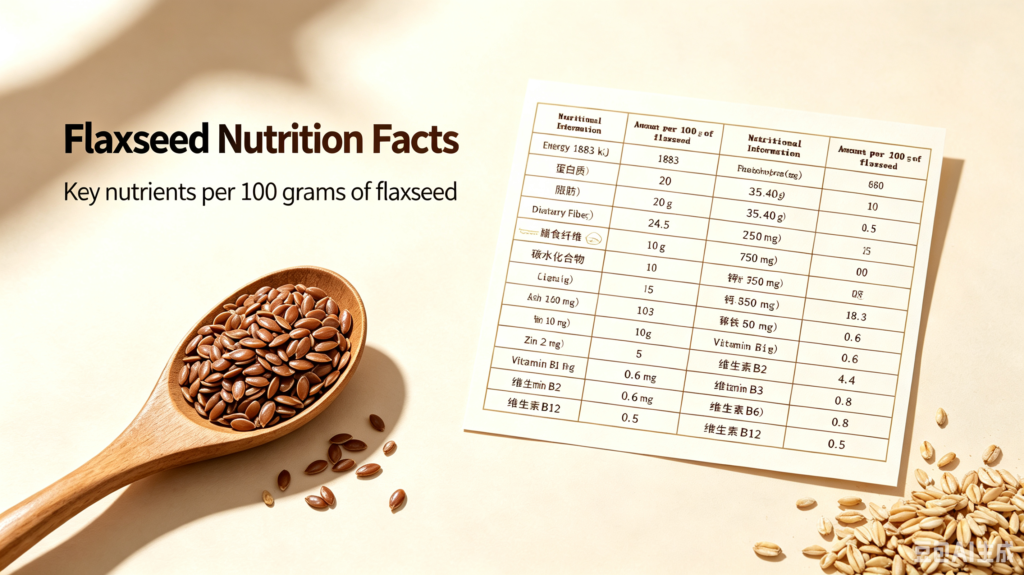
In addition to being rich in fat and protein, flaxseeds also contain high levels of dietary fiber, lignans, minerals, and vitamins A, B1, B2, D, and E. See the table below for an analysis of their main components.
Nutritional Analysis Table for Flaxseeds
| Nutritional Information | Amount per 100 g of flaxseed | Nutritional Information | Amount per 100 g of flaxseed |
| Thermal Energy(kj) | 1883 | Phosphorus(mg) | 650 |
| Protein(g) | 20 | Iron(mg) | 10 |
| Fat(g) | 35-40 | Copper(mg) | 0.7 |
| Dietary Fiber(g) | 24.5 | Zinc(mg) | 2 |
| Linen polysaccharides(g) | 10 | Manganese(mg) | 7 |
| Flaxseed Gum(g) | 5 | Vitamin A(iu) | 18.8 |
| Lignin(g) | 1.2-3 | Vitamin E(iu) | 0.6 |
| Ash content(g) | 4.5 | Vitamin B1(mg) | 0.6 |
| Water(g) | 5 | Vitamin B2(mg) | 0.3 |
| Potassium(mg) | 750 | Niacin(mg) | 4.4 |
| Calcium(mg) | 250 | Vitamin B6(mg) | 0.8 |
| Magnesium(mg) | 350 | Vitamin B12(mg) | 0.5 |
Properties of Flaxseed Oil
Fats are all composed of one molecule of glycerol and three molecules of fatty acids. Fatty acids consist of carbon, hydrogen, and oxygen atoms. Depending on the degree of unsaturation in the molecule and the natural state of the fat, they can be classified as saturated fatty acids, monounsaturated fatty acids, polyunsaturated fatty acids, and trans fatty acids.
Fatty Acid Composition of Flaxseed Oil
| Fatty acid | Range (% by weight) | Saturation | Classification |
|---|---|---|---|
| Alpha-linolenic acid (ALA) | 45–62 | Unsaturated | Polyunsaturated fatty acid; essential |
| Oleic acid | 19–29 | Monounsaturated | Monounsaturated fatty acid |
| Linoleic acid (LA) | 14–20 | Unsaturated | Polyunsaturated fatty acid; essential |
| Palmitic acid | 3–6 | Saturated | Saturated fatty acid |
| Stearic acid | 2–6 | Saturated | Saturated fatty acid |
- Alpha-linolenic acid and linoleic acid are essential fatty acids for humans.
- Oleic acid is a monounsaturated fatty acid.
- Palmitic and stearic acids are saturated fatty acids.
Linoleic acid (Ω-6)
Linoleic acid is a polyunsaturated omega-6 fatty acid found in many vegetable oils. At high intakes, concerns have been raised about associations with metabolic and inflammatory processes, and some observations link excessive omega-6 consumption to adverse health outcomes when not balanced by omega-3 intake. Moderate, dietary sources of linoleic acid can be part of a varied diet, but attention to overall fatty acid balance is advisable.
Alpha-linolenic acid (Ω-3)
Alpha-linolenic acid (ALA) is a plant-derived omega-3 fatty acid. It serves as a precursor to longer-chain omega-3 fats in the body and is associated with several cardiovascular and inflammatory benefits when consumed as part of a balanced diet. Adequate intake of ALA contributes to maintaining vascular health and may support anti-inflammatory effects.
Flaxseed oil and omega-3 content
Flaxseed oil contains a high concentration of alpha-linolenic acid, making it a prominent source of plant-based omega-3 fats. Among common vegetable oils, flaxseed oil is notable for its relatively high ALA content and comparatively lower linoleic acid content, contributing to its reputation as a healthful option within a diversified fat intake.
Flaxseed composition and dietary considerations
- Flaxseeds provide a substantial proportion of dietary fat, along with protein, fiber, and micronutrients.
- The fatty acid profile of flaxseed oil is characterized by a substantial ALA fraction, with a lower ratio of omega-6 linoleic acid compared to many other plant oils.
- For optimal health benefits, consider a balanced intake of omega-3 and omega-6 fats by varying fat sources and aligning with current dietary guidance.
- As with all fats, moderation is advised, and overall dietary patterns should emphasize whole foods, variety, and nutrient-dense choices.
Properties of Flax Protein
Proteins are macromolecules composed of amino acids. Each amino acid molecule contains an amino group (-NH) and a carboxyl group (-COOH). When amino acids link together to form peptide chains, these chains fold into different shapes and structures, resulting in various types of proteins. Proteins play important roles in the body, such as: 1. Building and repairing human tissues; 2. They constitute various important bioactive substances in the human body, such as the countless enzymes, various hormones, and antibodies essential for human survival; and they provide energy to the body. Proteins from food are broken down into amino acids in the body and then resynthesized into the proteins the body needs. It is recommended to consume 0.8 g of protein per kilogram of body weight daily, with the energy provided by protein accounting for approximately 15% to 20% of total energy intake.
Every 100 grams of dry flaxseed contains approximately 20 grams of protein. Flaxseed protein is characterized by a high content of branched-chain amino acids (BCAAs: valine, leucine, isoleucine), a low content of aromatic amino acids (AAA: tyrosine, phenylalanine), and a high Fischer ratio (BCAA/AAA)⁶. This makes it suitable for patients with special needs—such as those suffering from malnutrition due to cancer, burns, trauma, or hepatitis—as it provides food capable of producing specific physiological functions. Although soy protein has low BCAA and Fischer ratios, it does not possess the physiological characteristics of flaxseed protein.
Aside from their relatively low lysine content, flaxseeds are rich in various other amino acids, particularly arginine, glutamic acid, and aspartic acid. The edible protein in flaxseeds can help prevent various diseases, such as coronary heart disease, kidney disease, and cancer. Glutamic acid supports the immune system and boosts energy levels; arginine has been reported to help prevent heart disease; and the cysteine and methionine in flaxseed protein can increase the body’s antioxidant levels, potentially stabilize DNA during cell division, and reduce the risk of colon cancer.
Flaxseed protein also affects blood glucose levels. Because it binds to plant gums, it stimulates insulin secretion, thereby helping to reduce excess blood sugar. When flaxseed protein binds to soluble polysaccharides, it significantly reduces the absorption of lumineamine in the colon, thereby preventing the tumor-promoting effects of this substance.
The lysine-to-arginine ratio is a factor influencing blood cholesterol accumulation and atherosclerosis: the lower the ratio, the more beneficial the protein is to the human body. High-quality soy protein has a relatively high ratio of 0.8, whereas high-quality flaxseed protein has a lower ratio of 0.33. It has a lesser impact on blood cholesterol accumulation and atherosclerosis, and is therefore highly beneficial to human health.
Properties of Flaxseed Gum
Flaxseed gum, also known as Franklin gum, consists primarily of 80% polysaccharides and 9% protein. It is a pure, natural, pollution-free, multifunctional, and highly nutritious biological gum extracted through a specific process from the seed coats of flaxseeds, which contain 8% to 12% gum by seed weight. It has a wide range of applications in the food industry. The polysaccharides it contains consist primarily of acidic and neutral polysaccharides, with acidic polysaccharides predominating. Neutral polysaccharides are mainly composed of xylose, glucose, arabinose, and galactose, with a molar ratio of 6.0:3.2:2.8:1.0. The acidic polysaccharides consist of rhamnose, galactose, fucoidan, and galacturonic acid, with a molar ratio of 4.8:3.1:1:3.7. Flaxseed gum is recognized by the National Green Food Development Center as a dedicated additive for green foods. It is characterized by high nutritional content, high viscosity, strong water absorption, excellent emulsifying properties, and the ability to adsorb and detoxify heavy metals. As an edible dietary fiber, flaxseed gum offers skin care, beauty, and health benefits. It also plays a role in reducing the incidence of diabetes and coronary heart disease, preventing colon and rectal cancers, and reducing the prevalence of obesity.
Properties of Flax Dietary Fiber
Flaxseed dietary fiber is an ideal, all-natural health food. It has many important physiological functions: it increases feelings of fullness in the stomach, reduces food intake, and helps prevent obesity; by altering the composition and metabolism of the intestinal microbiota, it induces the proliferation of large numbers of aerobic bacteria—particularly Bifidobacterium—thereby playing a significant role in preventing colon cancer and constipation; by lowering cholesterol and blood lipids, it plays a significant role in preventing and improving heart disease caused by coronary atherosclerosis; it can improve peripheral tissue sensitivity to insulin, thereby reducing insulin requirements; it also has physiological effects such as preventing gallstones and breast cancer. Therefore, as a functional ingredient, flaxseed dietary fiber can be consumed directly or used in the processing of functional foods.
Properties of Flaxseed Polysaccharides
Flaxseed polysaccharides help boost immunity, lower blood lipid levels, reduce blood sugar, and prevent atherosclerosis, diabetes, and obesity.
According to modern medical theory, under normal circumstances, free radicals in the human body exist in a dynamic equilibrium of constant production and elimination. If free radicals are produced too rapidly or eliminated too slowly, they will accumulate excessively, leading to oxidative damage to macromolecules and various organelles at the molecular, cellular, and organ/tissue levels, thereby accelerating the body’s aging process and inducing various diseases. Free radical scavengers can eliminate excess free radicals produced during metabolic processes; therefore, maintaining a certain level of free radical scavengers in the body plays a crucial role in delaying aging and preventing disease. However, as people age, the body’s ability to produce free radical scavengers gradually declines, leading to a reduction in their levels and a gradual decrease in their activity. This weakens the body’s ability to resist free radical damage, accelerates the aging process, and triggers a series of pathological changes. Current research has found that flaxseed polysaccharides possess free radical-scavenging properties and can slow down the aging process; therefore, they can be widely applied in the manufacturing of food, pharmaceuticals, and cosmetics.
Properties of Lignans
Lignans are diphenolic compounds with a 2,3-diphenylbutane skeleton, primarily consisting of open-ring isolupol (SDG) and matresin (MAT), which can be converted into mammalian lignans—lignol and lignolide—in the human or animal body under the action of facultative aerobic microorganisms. In vitro, lignans exhibit both estrogenic and antiestrogenic effects. Lignans in plants typically occur in glycosylated forms; for example, the lignan SDG in flaxseed appears as a disaccharide glycoside, while MAT in sunflower seed meal appears as a monosaccharide glycoside. Lignans are mild phytoestrogens. The lignan content in flaxseed is 75 to 800 times higher than in any other of the 66 plant-based foods studied (including sesame seeds, which have the second-highest content; grains, legumes, vegetables, fruits, berries, and tea, among others), accounting for approximately 1% to 3% of the total weight of flaxseed. Lignans can inhibit the formation and growth of hormone-dependent cancer cells. Studies have shown that lignans are particularly effective in treating prostate and breast cancer. Therefore, when effectively purified, lignans can play a significant role in cancer treatment.
In addition, clinical studies have shown that foods containing phytoestrogens can help alleviate symptoms associated with perimenopause and menopause. Women going through perimenopause and menopause who consume flaxseed—which is rich in lignans—can significantly reduce these symptoms.

Alex Wang
He researches nutritional information and creates educational content to help consumers better understand healthy fats, omega-3s, and food choices.