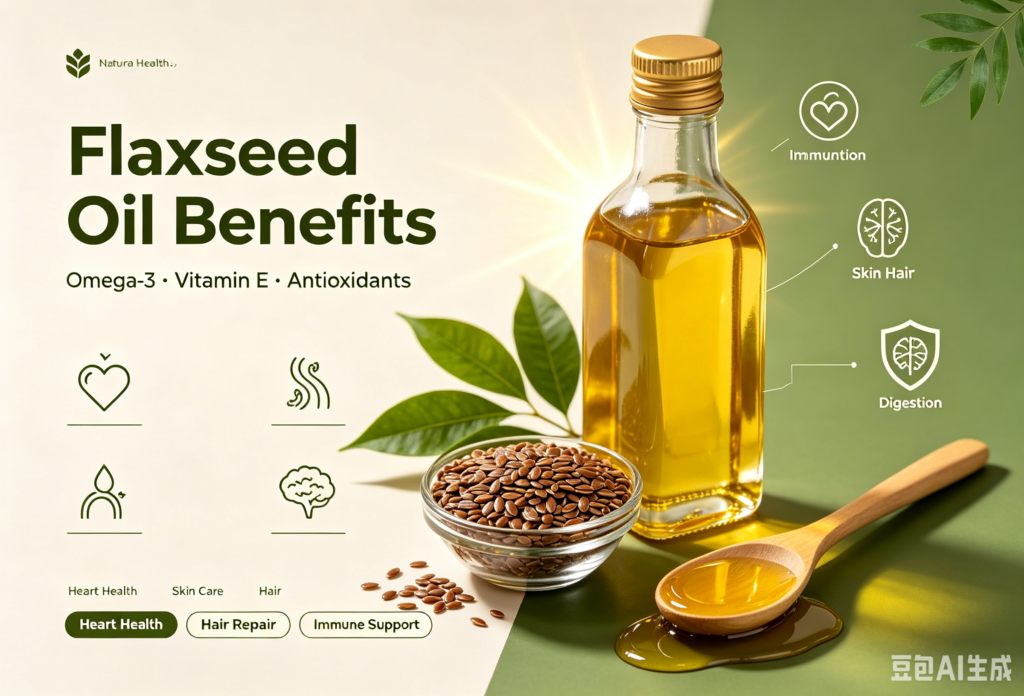
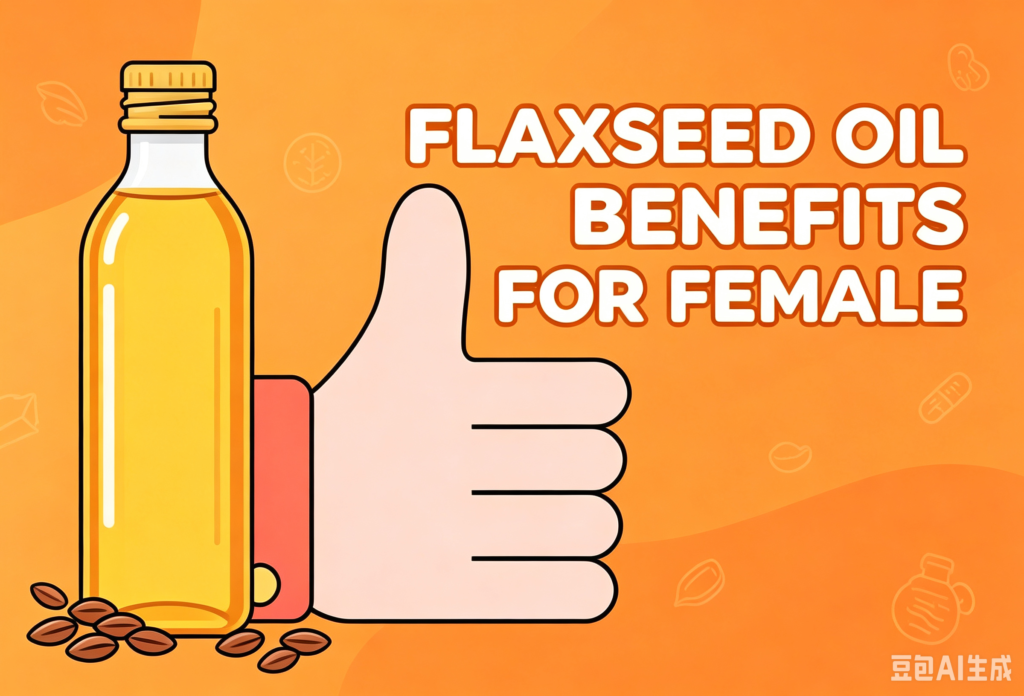
Flaxseed oil benefits for women are mostly nutrition-related. Flaxseed oil is rich in alpha-linolenic acid (ALA), a plant-based omega-3 fatty acid, and may support a heart-conscious diet, dry skin care, hair routines and general wellness. It should not be described as a hormone cure, fertility treatment or menopause treatment.
This guide explains realistic benefits, what claims need caution, and who should ask a healthcare professional before using flaxseed oil regularly.
Quick answer
For women, flaxseed oil may help increase plant-based omega-3 intake and may support dry skin or hair routines. Some women also use flaxseed products because flaxseed contains plant compounds called lignans, but flaxseed oil is not the same as whole or ground flaxseed. Flaxseed oil contains fat and ALA; it does not provide the fiber found in ground flaxseed.
1. Provides plant-based omega-3 ALA
The NIH Office of Dietary Supplements explains that ALA is an essential omega-3 fatty acid found mainly in plant oils, including flaxseed oil. Because the body cannot make ALA, it must come from foods or supplements.
This is the strongest and safest claim for flaxseed oil: it can be a plant-based source of omega-3 fat, especially for women who do not eat much fish. However, ALA is different from EPA and DHA, the omega-3 fats found in seafood and fish oil.
2. Fits a heart-conscious eating pattern
Mayo Clinic notes that flaxseed and flaxseed oil are rich sources of ALA, and omega-3 fatty acids are commonly studied for heart health. Flaxseed oil should be used as part of an overall dietary pattern, not as a replacement for medical care, cholesterol medication or blood-pressure treatment.
A practical way to use it is cold, such as in salad dressing, smoothies or yogurt. Avoid using flaxseed oil for high-heat frying because it is heat-sensitive.
3. May support dry skin and hair care
Some women use flaxseed oil for dry skin or hair because oils can reduce moisture loss and improve texture. For hair, the realistic benefit is usually softness, shine and reduced breakage, not guaranteed new growth. See our guide to flaxseed oil for hair growth for a more detailed explanation.
4. Whole flaxseed vs flaxseed oil for women
This difference matters. Ground flaxseed contains fiber and lignans; flaxseed oil mainly contains fat and ALA. Mayo Clinic notes that flaxseed oil does not have fiber. If your goal includes digestion, regular bowel movements or fiber intake, ground flaxseed may be more useful than oil alone.
Claims that need caution
- Hormone balance: do not treat flaxseed oil as a proven estrogen-balancing product.
- Menopause: do not rely on flaxseed oil to treat hot flashes or menopause symptoms.
- Fertility: flaxseed oil should not be marketed as a fertility treatment.
- Inflammatory disease: it should not replace professional treatment for arthritis, autoimmune disease or chronic inflammation.
Pregnancy, breastfeeding and medication cautions
Women who are pregnant, trying to become pregnant, or breastfeeding should be careful. NCCIH says little is known about whether flaxseed oil is safe during pregnancy or breastfeeding, and Mayo Clinic advises not taking flaxseed or flaxseed oil during pregnancy or breastfeeding.
Also ask a clinician first if you take blood-thinning medication, diabetes medication, blood-pressure medication, birth control pills, estrogen therapy, or any treatment for a hormone-sensitive condition.
How to use flaxseed oil safely
- Use it cold, not for frying.
- Start with a small serving and follow the product label.
- Store it tightly closed, cool and away from light; refrigerate after opening if the label recommends it.
- Stop using it if it smells rancid or causes digestive discomfort, rash, itching or other allergy signs.
Related guides
- How much flaxseed oil per day
- Flaxseed oil benefits for men
- Flaxseed oil for hair growth
- Flaxseed oil safety and side effects
Sources
- NIH Office of Dietary Supplements: Omega-3 Fatty Acids
- Mayo Clinic: Flaxseed and flaxseed oil
- NCCIH: Flaxseed and flaxseed oil safety
This article is for general education and is not medical advice.

Alex Wang
He researches nutritional information and creates educational content to help consumers better understand healthy fats, omega-3s, and food choices.