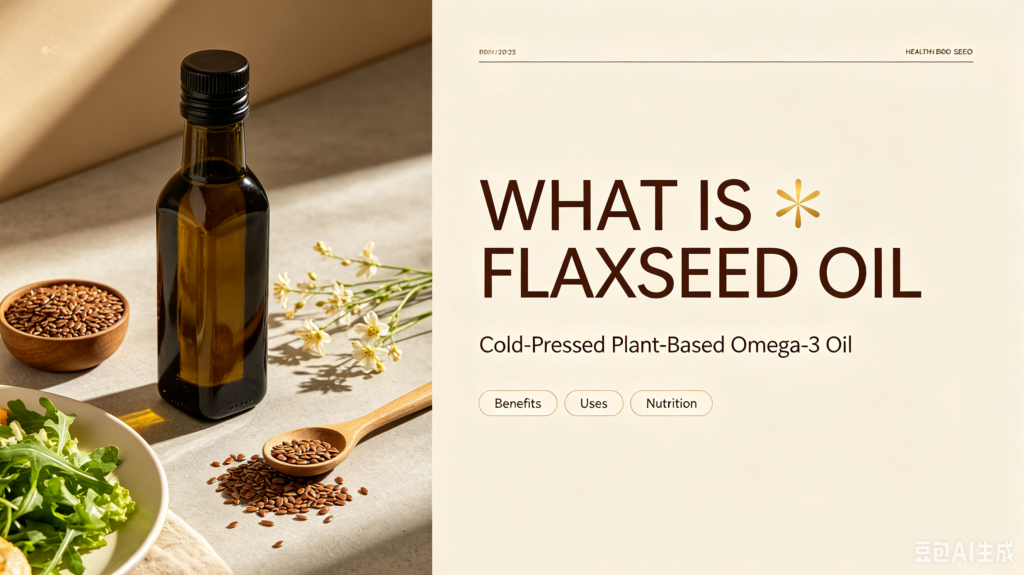
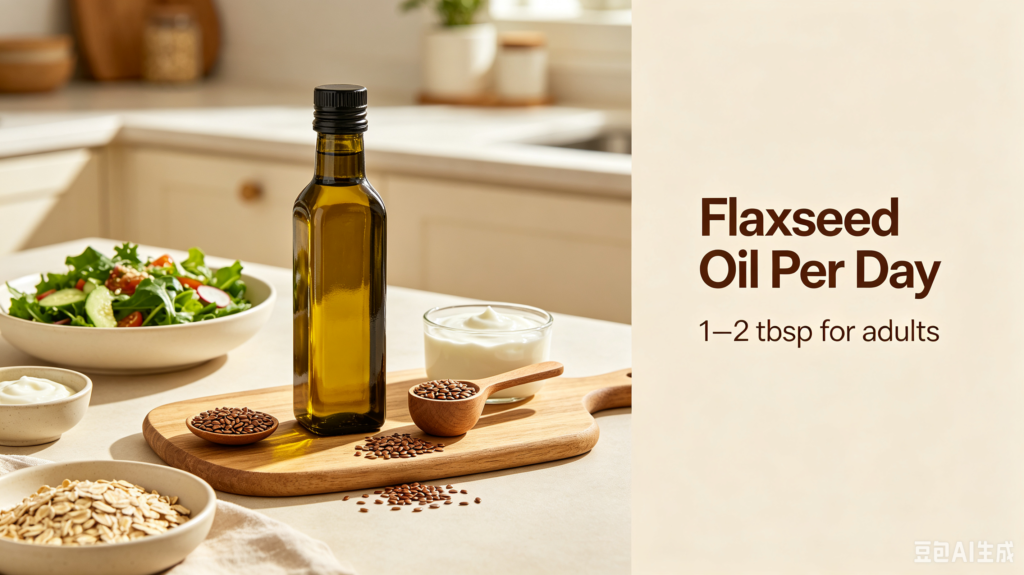
How much flaxseed oil per day is a common question, but there is no single perfect dose for everyone. The safest answer is to follow the product label, start small, and treat flaxseed oil as a food or supplement source of alpha-linolenic acid (ALA), not as a medicine.
This guide explains practical daily-use ranges, what ALA means, when to be cautious, and why pregnant or breastfeeding women and people taking medication should ask a healthcare professional first.
Quick answer
Many adults use flaxseed oil in small food amounts, such as about 1 teaspoon to 1 tablespoon per day, but supplement products vary. If your bottle has a serving size, use that label as the first guide. Do not increase the amount because you expect faster results.
If you are new to flaxseed oil, start with a smaller amount and watch for digestive discomfort, loose stools, allergy symptoms or nausea.
Why dosage depends on ALA
Flaxseed oil is valued because it contains ALA, a plant-based omega-3 fatty acid. The NIH Office of Dietary Supplements explains that ALA is an essential fatty acid found mainly in plant oils such as flaxseed oil, soybean oil and canola oil.
NIH lists adequate intake levels for ALA by age and sex, but those numbers refer to total ALA from the whole diet, not only from flaxseed oil. That means your daily amount depends on what else you eat, including walnuts, chia seeds, canola oil, soybean oil, fish or omega-3 supplements.
A practical way to start
- Read the serving size on your flaxseed oil bottle.
- Start below or at the label serving size for the first week.
- Use it with food rather than taking it on an empty stomach.
- Use it cold in salad dressing, yogurt or smoothies.
- Stop or reduce the amount if you notice digestive side effects.
Do not use flaxseed oil as a treatment dose
Flaxseed oil should not be used as a self-prescribed treatment dose for cholesterol, inflammation, arthritis, hormone symptoms, constipation, pregnancy nutrition or hair loss. It can be part of a diet, but it is not a replacement for medical advice or prescribed treatment.
Who should ask a clinician first?
- People who are pregnant, trying to become pregnant or breastfeeding.
- People taking blood-thinning medication, diabetes medication or blood-pressure medication.
- People using birth control pills, estrogen therapy or treatment for hormone-sensitive conditions.
- People preparing for surgery.
- Children, unless a pediatric clinician has approved use.
Mayo Clinic lists possible interactions and safety concerns for flaxseed and flaxseed oil, and NCCIH notes that little is known about flaxseed oil safety during pregnancy or breastfeeding. This is why a cautious approach is important.
Can you take flaxseed oil every day?
Some people use flaxseed oil daily as part of their diet. Daily use may be reasonable for generally healthy adults when used in normal food amounts and tolerated well. It may not be appropriate for everyone, especially if you take medication or have a medical condition.
Best time to take flaxseed oil
The best time is the time you can take it consistently with food. Many people prefer breakfast, lunch or dinner. Taking it with food may reduce stomach discomfort. For a full timing guide, see when is the best time to take flaxseed oil.
Storage and freshness
Flaxseed oil can go rancid. Keep it tightly closed, away from heat and light, and refrigerate after opening if the label recommends it. Do not use oil that smells paint-like, bitter or spoiled.
Related guides
- Flaxseed oil benefits for women
- Flaxseed oil benefits for men
- Flaxseed oil for hair growth
- Flaxseed oil safety and side effects
Sources
- NIH Office of Dietary Supplements: Omega-3 Fatty Acids
- Mayo Clinic: Flaxseed and flaxseed oil
- NCCIH: Flaxseed and flaxseed oil safety
This article is for general education and is not medical advice.

Alex Wang
He researches nutritional information and creates educational content to help consumers better understand healthy fats, omega-3s, and food choices.