
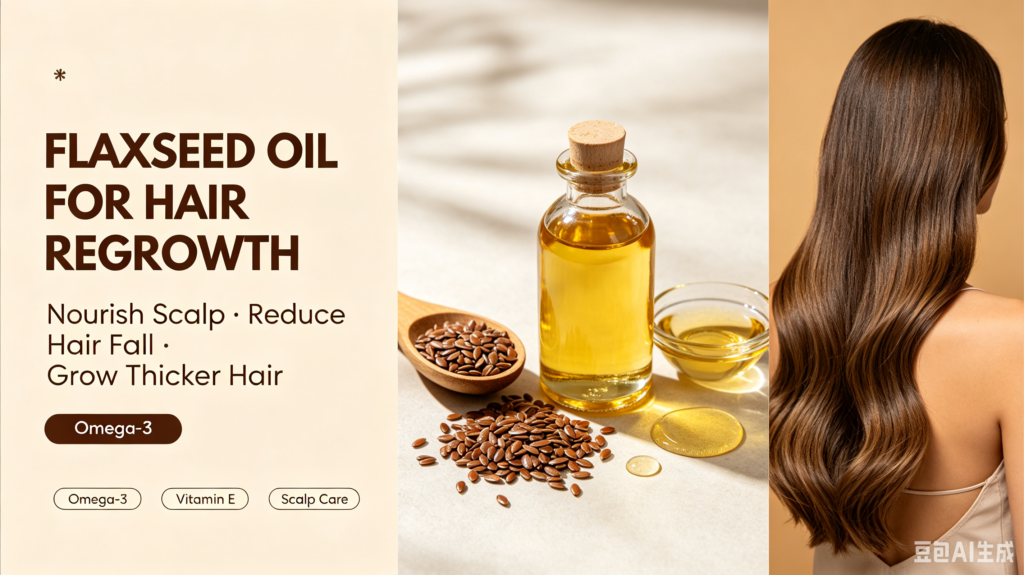
Flaxseed oil for hair regrowth is often promoted as a natural solution, but the honest answer is more limited: flaxseed oil may support hair softness, scalp comfort and length retention, but it is not a proven standalone treatment for medical hair loss.
This page explains what flaxseed oil can realistically do, what it cannot do, and when it is better to speak with a dermatologist. For the main step-by-step routine, read our complete guide to flaxseed oil for hair growth.
Can flaxseed oil regrow hair?
There is not enough strong human evidence to say that flaxseed oil regrows lost hair by itself. Hair regrowth depends on the cause of hair loss. Breakage, dryness and styling damage are different from follicle-level hair loss such as androgenetic alopecia or alopecia areata.
For breakage-prone hair, flaxseed oil may help by reducing dryness and friction. For true shedding, bald patches or thinning from the roots, it should be considered supportive care only, not treatment.
What flaxseed oil may help with
- Dry or frizzy hair that needs a light oil seal.
- Breakage at the ends, which can make hair look like it is not growing.
- A nutrition routine that includes plant-based omega-3 ALA.
- Occasional scalp dryness, if the oil does not cause irritation or buildup.
The NIH Office of Dietary Supplements explains that ALA is an essential omega-3 fatty acid found in plant oils including flaxseed oil. Mayo Clinic also identifies flaxseed and flaxseed oil as rich sources of ALA. These nutrition facts support general wellness claims, but they do not prove that flaxseed oil reverses hair loss.
What flaxseed oil cannot promise
- It cannot guarantee faster hair growth.
- It cannot be presented as a cure for baldness.
- It cannot replace diagnosis for sudden shedding or patchy hair loss.
- It cannot fix hair loss caused by thyroid disease, iron deficiency, medication effects or scalp disorders.
A safer way to try it
- Patch test before using flaxseed oil on your scalp.
- Use only a few drops at first, especially if your scalp is oily.
- Apply mainly to dry ends if breakage is your main concern.
- Wash out if you notice itching, redness, bumps or increased dandruff.
- Track breakage and shedding separately for 6–8 weeks.
When to get professional help
The American Academy of Dermatology says effective hair-loss treatment starts with finding the cause. Consider professional help if hair loss is sudden, patchy, painful, associated with scalp scaling, or continuing for several months.
If you are already using medicated hair-loss treatments, ask your clinician before adding heavy scalp oils. Oils may interfere with how some topical products feel or spread.
Related guides
- Flaxseed oil for hair growth — main hair routine and benefits guide.
- How much flaxseed oil per day — safe daily-use considerations.
- Flaxseed oil safety and side effects — cautions before daily use.
Sources
- NIH Office of Dietary Supplements: Omega-3 Fatty Acids
- Mayo Clinic: Flaxseed and flaxseed oil
- American Academy of Dermatology: Hair loss diagnosis and treatment
This article is educational and is not medical advice.

Alex Wang
He researches nutritional information and creates educational content to help consumers better understand healthy fats, omega-3s, and food choices.
Pingback: Flaxseed Oil and Hair Growth: Science, Benefits & Best Routine - ★flax flaxseed oil ★