
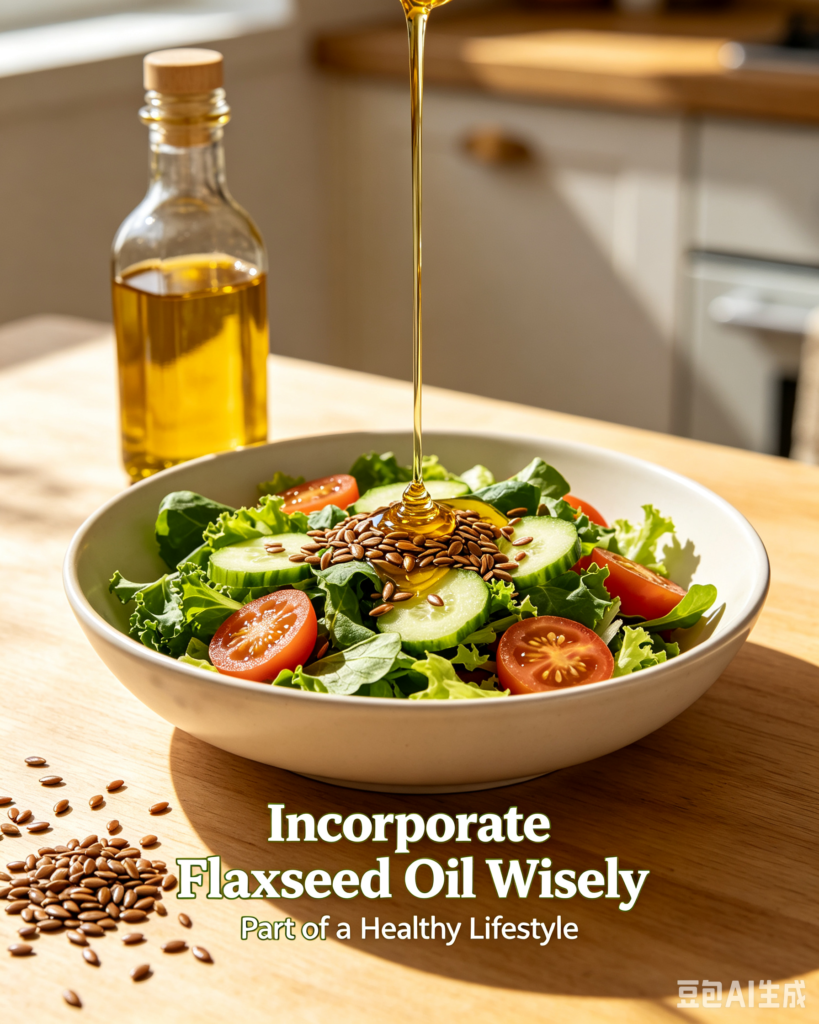
Discover how flaxseed oil may support weight management as part of a balanced diet. Learn about plant-based omega-3s, healthy fats, and practical tips for incorporating flaxseed oil into your daily routine.
More people than ever are thinking carefully about how to manage their weight in a healthy, sustainable way. With so much conflicting information about what to eat and what to avoid, it can feel overwhelming to make the right choices. One topic that often confuses people is dietary fat—should you eat less of it, or is it actually beneficial?
The truth is, not all fats are created equal. While certain types of fat can contribute to health concerns when consumed in excess, others are essential nutrients that play important roles in keeping your body functioning well. Plant-based sources of healthy fats, in particular, have drawn growing attention from nutrition researchers and health-conscious consumers alike.
Flaxseed oil is one such plant-based fat that has gained interest for its unique nutritional profile. Derived from the seeds of the flax plant (Linum usitatissimum), this oil is rich in alpha-linolenic acid (ALA), a type of plant-based omega-3 fatty acid. While it’s not a magic solution for weight loss, flaxseed oil may play a supportive role in a balanced approach to weight management when used thoughtfully as part of an overall healthy lifestyle.
This article explores the science behind flaxseed oil, its nutritional benefits, and how it might fit into a weight-friendly diet—without making exaggerated claims or promising unrealistic results.
What Is Weight Management?
Before diving into how flaxseed oil may fit into the picture, it’s helpful to clarify what weight management actually means. In simple terms, managing your weight is about maintaining a balance between the energy you take in through food and the energy your body uses through daily activities and bodily functions.
A healthy approach to weight management typically involves three key elements:
Calorie balance is the foundation. When you consume about the same number of calories as your body burns, your weight tends to stay stable. Consistently taking in more calories than you burn can lead to gradual weight gain, while consistently taking in fewer calories can lead to weight loss. However, it’s important to emphasize that weight is influenced by many factors—including genetics, hormones, sleep quality, stress levels, and overall health—not just calorie counting alone.
Physical activity plays a vital role in weight management. Regular movement helps your body use energy efficiently, supports muscle maintenance, and contributes to overall well-being. The World Health Organization recommends at least 150 minutes of moderate-intensity physical activity per week for adults, though any amount of movement is better than none.
Healthy eating habits are the third pillar. This doesn’t mean following restrictive diets or eliminating entire food groups. Instead, it involves building a pattern of eating that includes a variety of nutrient-dense foods—vegetables, fruits, whole grains, lean proteins, and healthy fats—while moderating intake of highly processed foods, added sugars, and less healthy fats.
The most effective weight management strategies focus on sustainable lifestyle changes rather than quick fixes. No single food can magically transform your weight overnight; instead, it’s the overall pattern of eating and living that makes the biggest difference over time.
Nutritional Profile of Flaxseed Oil
Flaxseed oil stands out among plant-based oils for its impressive fatty acid composition. Let’s take a closer look at what makes it nutritionally unique.
Alpha-Linolenic Acid (ALA): A Plant-Based Omega-3
The most notable component of flaxseed oil is alpha-linolenic acid (ALA), an essential omega-3 fatty acid. ALA is called “essential” because your body cannot produce it on its own—you must obtain it through food. Flaxseed oil is one of the richest plant sources of ALA, with the oil containing approximately 40% to 60% ALA by weight. This makes it a valuable option for people who follow vegetarian or vegan diets and may not consume fish, which is a common source of other types of omega-3s like EPA and DHA.
While ALA needs to be converted in the body to the more active forms EPA and DHA, research from the NuEva Study suggests that flaxseed oil supplementation can significantly increase levels of EPA, DPA, and DHA in the blood across different dietary patterns, including Western, flexitarian, vegetarian, and vegan diets. The study found increases of ALA ranging from 22.5% to 38.4% and EPA increases from 27.3% to 40.7% across all diet groups.
Unsaturated Fats
Flaxseed oil is predominantly composed of unsaturated fats—both polyunsaturated and monounsaturated fats. These are often referred to as “healthy fats” because they can support heart health and other bodily functions when used in place of saturated and trans fats. The oil’s fatty acid profile is particularly high in polyunsaturated fatty acids, which includes the beneficial omega-3 family.
Other Bioactive Compounds
Beyond its fatty acid content, flaxseed oil contains other bioactive compounds that may contribute to its health effects. These include phytosterols and phenolic compounds such as ferulic acid and p-coumaric acid, which have been studied for their anti-inflammatory and antioxidant properties. It’s worth noting, however, that flaxseed oil does not contain the lignans found in whole flaxseeds, which are another component often associated with health benefits.
How Flaxseed Oil May Support Weight Management
So, where does flaxseed oil fit into the weight management picture? Current research suggests several potential pathways through which incorporating this healthy fat into a balanced diet may be supportive.
Healthy Fats and Satiety
One of the most important ways healthy fats contribute to weight management is through their role in satiety—the feeling of fullness and satisfaction after a meal. Including fat in your meals can help you feel more satisfied and may reduce the urge to overeat or snack between meals.
This is why dietary guidelines emphasize that fat is an important part of a balanced diet, not something to be eliminated. The key is choosing healthier fat sources, like those from plants, and consuming them in appropriate amounts. A meal that includes a small amount of healthy fat—such as a salad dressed with flaxseed oil—may help you stay satisfied longer than a fat-free meal with the same calorie content.
Supporting a Balanced Diet
Flaxseed oil can also support weight management indirectly by helping you replace less healthy fats in your diet. Many people consume more saturated fats than recommended, often from processed foods and animal products. Substituting these with unsaturated plant-based fats like flaxseed oil can improve the overall quality of your diet without requiring drastic changes.
Additionally, flaxseed oil can make nutrient-rich foods more enjoyable. Drizzling a small amount over roasted vegetables, adding it to a smoothie, or using it in a homemade vinaigrette can enhance the flavor and nutritional value of meals that are already part of a healthy eating pattern.
Omega-3 and Metabolic Health Research
Researchers have been studying omega-3 fatty acids for decades, and a growing body of evidence suggests they may play a role in metabolic health. A review published in 2024 examining flaxseed and olive oils highlighted the potential of these oils to support metabolic function, particularly through their anti-inflammatory and lipid-modulating properties.
A study on blended edible oils containing flaxseed oil also found that the inclusion of flaxseed oil was associated with favorable outcomes in animal models, including reductions in body fat content and improvements in lipid profiles compared to single oils. While these findings are promising, it’s important to note that they come from animal studies and may not directly translate to human outcomes.
The relationship between omega-3 fatty acids and metabolism is complex. Current research continues to explore these connections, but the current understanding is that omega-3s support overall health in ways that may indirectly contribute to weight management, rather than directly causing weight loss.
Does Flaxseed Oil Help You Lose Weight?
This is perhaps the most common question people ask, and it deserves a straightforward answer: flaxseed oil is not a weight loss supplement.
The research on flaxseed oil and weight loss has produced mixed results. A quasi-experimental study on women given 1000 mg of flaxseed oil daily for 12 weeks found a statistically insignificant effect on body weight in the intervention group, while a difference was observed when comparing post-test results between groups. The authors noted potential but the results were not definitive.
The key point to understand is that weight management depends primarily on total calorie intake, physical activity, and overall lifestyle patterns—not on any single food or supplement. Flaxseed oil contains calories, approximately 120 calories per tablespoon (about 14 grams). If you add it to your diet without accounting for those calories elsewhere, it could actually contribute to weight gain rather than support weight loss.
That being said, using flaxseed oil as a replacement for less healthy fats in a well-balanced diet—and being mindful of portion sizes—can be a smart way to improve the nutritional quality of what you eat. But expecting flaxseed oil to directly cause weight loss is unrealistic and not supported by the evidence.
Flaxseed Oil vs Other Oils for Weight Management
When choosing oils to include in a weight-friendly diet, it’s helpful to compare their nutritional profiles. Here’s how flaxseed oil stacks up against some other common options:
Flaxseed Oil
Flaxseed oil is uniquely rich in plant-based omega-3 ALA, making it a standout choice for those seeking to increase their intake of this essential fatty acid. It is primarily composed of polyunsaturated fats, which are considered heart-healthy when consumed in appropriate amounts. Because it has a low smoke point, it is best used in cold applications like salad dressings rather than cooking.
Olive Oil
Olive oil, particularly extra virgin olive oil, is a cornerstone of the Mediterranean diet. It is rich in monounsaturated fats, primarily oleic acid, and contains polyphenolic compounds with antioxidant and anti-inflammatory properties. Olive oil’s monounsaturated fat content has been well-studied for its potential cardiovascular benefits. Unlike flaxseed oil, olive oil is more versatile and can be used for light cooking as well as cold applications.
Coconut Oil
Coconut oil has a much different fatty acid profile than either flaxseed or olive oil. It is high in saturated fat—about 80% to 90%—which is why health guidelines generally recommend limiting its use. While it has gained popularity for certain culinary uses, the American Heart Association advises using it sparingly, particularly for those concerned about heart health.
What About Oil Blends?
Research has explored the possibility that blending oils can offer nutritional benefits that single oils may not provide. A study on a blended oil containing flaxseed, coconut, sunflower, and olive oils found that the blend significantly lowered body weight gain, BMI, and body fat content in rats compared to single oils. The blend was designed to achieve a fatty acid ratio in line with WHO and AHA recommendations (SFA:MUFA:PUFA = 1:1.5:1). While this research is in the early stages, it suggests that balancing different fat sources may be beneficial.
How To Use Flaxseed Oil in a Weight-Friendly Diet
Incorporating flaxseed oil into your daily routine can be simple and enjoyable. Here are some practical suggestions for using it in ways that complement a balanced eating pattern:
Add to smoothies: Blend a teaspoon of flaxseed oil into your morning smoothie. It adds a mild, nutty flavor and incorporates healthy fats alongside fruits, vegetables, and protein.
Make salad dressing: Whisk flaxseed oil with vinegar, lemon juice, and herbs for a homemade vinaigrette. This is one of the most traditional and effective ways to enjoy the oil.
Mix with yogurt: Stir a small amount into plain yogurt, perhaps with some berries and a sprinkle of seeds or nuts for added texture.
Drizzle over breakfast foods: Add a drizzle to oatmeal, whole-grain toast, or pancakes after cooking—not during.
Use in dips and spreads: Incorporate flaxseed oil into hummus, pesto, or other spreads as a healthy fat source.
Important Usage Tips
- Keep it cold: Flaxseed oil is heat-sensitive and should not be used for frying or high-temperature cooking, as heat can damage its delicate fatty acids.
- Store properly: Keep the oil in the refrigerator once opened, and pay attention to expiration dates.
- Use appropriate portions: Like all oils, flaxseed oil is calorie-dense. A typical serving is 1 to 2 tablespoons daily.
- Avoid excessive consumption: More is not better. Stick to recommended amounts and remember that all fats should be consumed in moderation as part of a balanced diet.
How Much Flaxseed Oil Should You Take Daily?
Determining the right amount of flaxseed oil for you depends on several factors, including your overall diet, health status, and individual nutritional needs.
General recommendations: Most sources suggest a daily intake of 1 to 2 tablespoons (about 14 to 28 grams) of flaxseed oil. This amount provides a meaningful dose of ALA while remaining within reasonable calorie limits.
Nutritional reference: Eight grams of ground flaxseed (or 2.5 grams of flaxseed oil) provides approximately 1.1 grams of ALA, which is close to the daily adequate intake for women (1.1 g/day) and somewhat less than the recommendation for men (1.6 g/day).
Individual variation: The optimal amount can vary based on factors such as age, sex, overall diet quality, and specific health goals. A person who eats fish regularly, for example, may have less need for flaxseed oil than a vegetarian or vegan who doesn’t.
Professional guidance: If you are considering flaxseed oil for a specific health concern, or if you take medications or have health conditions, it’s wise to consult a healthcare professional before starting. They can help you determine what makes sense for your individual situation.
Who Should Be Careful With Flaxseed Oil?
While flaxseed oil is generally considered safe for most people when used appropriately, there are certain situations where caution is warranted.
Medications
Flaxseed oil may interact with several types of medications. It’s important to talk to your healthcare provider before using flaxseed oil if you take:
Blood-thinning medications: Flaxseed oil may slow blood clotting, which can increase the risk of bruising and bleeding when taken with anticoagulants (such as warfarin, apixaban, or heparin) or antiplatelet drugs (like aspirin or clopidogrel).
Diabetes medications: Flaxseed oil may affect blood sugar levels, potentially leading to hypoglycemia (low blood sugar) when combined with diabetes medications, including insulin, metformin, or others like Ozempic and Mounjaro.
Blood pressure medications: Flaxseed oil may lower blood pressure, which could cause blood pressure to drop too low when taken alongside medications like ACE inhibitors, ARBs, or calcium channel blockers.
Estrogen medications: Flaxseed can act similarly to the hormone estrogen, so it may interfere with hormone replacement therapy or birth control pills, potentially making them less effective.
Antibiotics: Some antibiotics can reduce the effectiveness of flaxseed by affecting the gut bacteria needed to convert its compounds into beneficial forms.
Health Conditions
Individuals with certain health conditions should also exercise caution:
- People with hormone-sensitive conditions: Because flaxseed contains phytoestrogens, individuals with breast cancer, endometriosis, fibroids, or other estrogen-sensitive conditions should consult a doctor before use.
- People with diabetes: As noted above, flaxseed oil may affect blood sugar levels, so those with diabetes should monitor their glucose carefully if using it.
- Pregnant women: The safety of flaxseed oil during pregnancy has not been well-studied, so it is best to consult a healthcare provider before use.
Surgery Precautions
Because flaxseed oil may affect blood clotting, it is generally recommended to stop taking it at least two weeks before surgery to reduce the risk of excessive bleeding during or after the procedure.
Frequently Asked Questions
Can flaxseed oil help with weight loss?
Flaxseed oil is not a weight loss supplement. While it may be a healthy addition to a balanced diet, weight loss depends primarily on overall calorie balance, physical activity, and lifestyle factors. No single food can produce weight loss on its own.
Is flaxseed oil good for weight management?
Flaxseed oil may support weight management indirectly by contributing to satiety and replacing less healthy fats in your diet. As part of a well-balanced eating plan and healthy lifestyle, it can be a beneficial addition—but it should not be seen as a primary weight management strategy.
Does flaxseed oil burn belly fat?
There is no credible evidence that flaxseed oil specifically targets belly fat or “burns” fat in any area of the body. Claims that any single food can target specific areas of fat are not supported by science. Total body composition is influenced by overall diet, physical activity, and genetics.
How many calories are in flaxseed oil?
Flaxseed oil contains approximately 120 calories per tablespoon (about 14 grams). Like all oils, it is calorie-dense, so it’s important to use it in moderation and account for its calories within your overall daily intake.
Can I take flaxseed oil every day?
Yes, many people take flaxseed oil daily as part of their routine. The typical recommended dose is 1 to 2 tablespoons per day. However, as with any supplement, it’s wise to start with a smaller amount and listen to your body’s response. If you take medications or have health conditions, consult your healthcare provider first.
flaxseed oil how much per day?
You may want to refer to the related reading.
flaxseed oil benefits for female?
You can refer to the related reading section, where we provide a detailed explanation.

Alex Wang
He researches nutritional information and creates educational content to help consumers better understand healthy fats, omega-3s, and food choices.