Flaxseed oil is one of the most popular plant-based functional oils, valued for its high ALA omega-3 content and clean nutritional profile. Every bottle of edible flaxseed oil starts from simple, whole flax seeds, which leads many curious home cooks and wellness enthusiasts to ask: can you make flaxseed oil yourself at home, or is factory production the only reliable option?
Understanding how is flaxseed oil made helps consumers recognize quality differences, avoid common homemade oil pitfalls, and confidently choose products that match safety and nutrition standards. While home extraction is technically possible, commercial flaxseed oil production process follows strict food-grade protocols that most home setups cannot replicate.
In this science-backed guide, we break down commercial cold-press manufacturing, explore how to make flaxseed oil in home environments, compare homemade vs store-bought quality, and explain why flaxseed oil’s unique chemistry makes it one of the most sensitive edible oils on the market. You will also learn whether homemadeflaxseed oil extraction delivers reliable nutrition and safety for daily use.
What Is Flaxseed Oil?
Flaxseed oil is a pure lipid extract pressed from dried, mature flax seeds. As explained in our detailed guide on What Is Flaxseed Oil, it is uniquely famous as a concentrated plant source of ALA omega-3 fatty acids, an essential nutrient the human body cannot produce independently.
Unlike whole ground flaxseed, pure flaxseed oil contains no fiber, protein, or solid seed matter — only purified plant fat. This concentrated structure is why it delivers potent fatty acid support and why users must follow safe dosage guidelines for daily use. If you are new to supplementation, understandingflaxseed oil how much per day helps you avoid overconsumption while unlocking consistent nutritional value.
High-quality cold-pressed flaxseed oil retains natural nutrients that may help preserve balanced dietary fat intake. Core flaxseed oil benefits include supporting general wellness, and targeted research highlights specialized advantages such as flaxseed oil benefits for male hormonal and cardiovascular health. For users focused on fatty acid intake, comparing flaxseed oil or omega 3 supplemental sources clarifies how plant-based ALA fits into broader dietary wellness goals.
Can You Make Flaxseed Oil At Home?
The straightforward answer is yes — you can technically make homemade flaxseed oil with specialized home oil-pressing equipment. However, home production comes with significant limitations that most consumers overlook.
Basic home oil presses can extract crude oil from cleaned, dried flax seeds, creating usable homemade flaxseed oil. That said, achieving true food-grade quality, consistent purity, and stable shelf life is extremely difficult in non-commercial settings. Professional production relies on controlled temperature environments, precision filtering, and standardized sanitation that home kitchens cannot replicate.
Freshness is another critical factor. Homemade oil lacks industrial anti-oxidation protection, meaning it oxidizes and turns rancid far faster than store-bought alternatives. While home pressing offers ultra-fresh extraction, safety and long-term reliability heavily depends on processing methods and strict storage discipline.
How Is Flaxseed Oil Made Commercially?
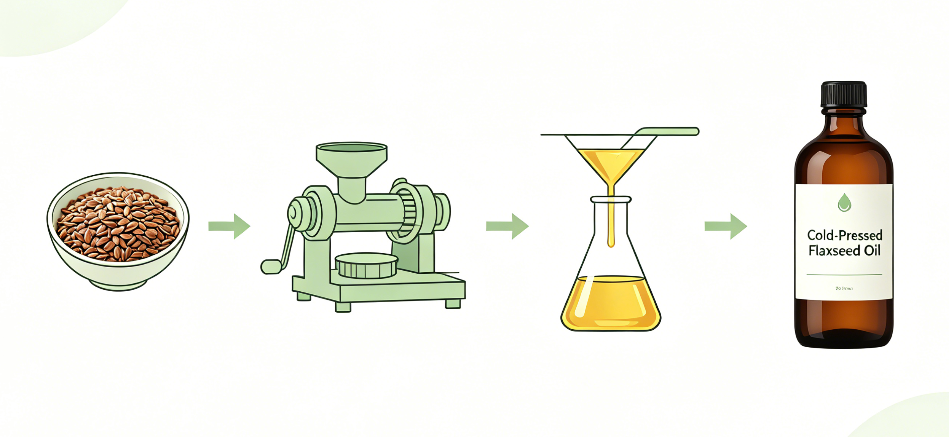
Commercial flaxseed oil manufacturing follows a precise, standardized five-step process designed to preserve nutrition, eliminate impurities, and ensure food safety. This is how premium cold pressed flaxseed oil is produced for retail sale:
Step 1: Selecting High-Quality Flax Seeds
Production begins with premium mature flax seeds that meet uniform size, dryness, and purity standards. Manufacturers exclude immature, moldy, or damaged seeds, as poor seed quality ruins oil flavor and accelerates oxidation. Consistent seed grading ensures stable nutrition across every batch.
Step 2: Thorough Cleaning and Preparation
Seeds undergo mechanical cleaning to remove dirt, debris, foreign particles, and residual plant material. Industrial sifters and air blowers eliminate contaminants that would otherwise compromise oil safety and taste. Clean, dry seeds are critical for clean-tasting, pure final oil.
Step 3: Controlled Cold Pressing Process
This is the most important stage for nutrition retention. Cold pressing mechanically squeezes oil from seeds without high heat or chemical solvents. Machines maintain internal temperatures below 120°F (49°C) to avoid fatty acid degradation. This low-heat method may help preserve fragile ALA omega-3 content and natural antioxidants.
Step 4: Multi-Stage Filtering
Freshly pressed crude oil contains fine seed sediment and micro-impurities. Commercial facilities use layered filtration systems to remove particles without stripping nutrients. Filtering creates clear, stable oil with a longer shelf life and cleaner flavor profile.
Step 5: Light-Blocking Packaging and Cold Storage
Finished oil is immediately sealed in dark amber glass bottles to block UV light and prevent oxidation. Premium manufacturers store and ship oil under temperature-controlled conditions to lock in freshness until consumer purchase.
What Is Cold Pressed Flaxseed Oil?
Cold pressing is the gold-standard extraction method for edible flaxseed oil and is commonly used by top food-grade manufacturers. Unlike heat-based expeller pressing or chemical solvent extraction, cold pressing avoids high thermal stress and industrial additives.
By keeping processing temperatures low, producers preserve the oil’s natural fatty acid structure, vitamin E content, and antioxidant properties. Heat-damaged flaxseed oil loses ALA potency, develops off-flavors, and oxidizes rapidly after opening.
For consumers shopping for quality products, our Best Flaxseed Oil Buying Guide explains how to verify true cold-pressed certification and avoid misleading low-quality alternatives. Understanding processing differences directly impacts how much nutritional value you gain from daily supplementation.
Can You Extract Oil From Flax Seeds Without Equipment?
Many beginners wonder if simple DIY methods can extract oil from flax seeds without specialized pressing machines. Unfortunately, effective oil extraction is not possible with basic kitchen tools alone.
Grinding flax seeds into meal releases oil content but does not separate pure liquid oil from fiber and solids. Ground flaxseed retains oil within the seed matrix, creating a moist, nutrient-dense meal — not purified flaxseed oil. While ground flaxseed offers excellent fiber and nutrition (as covered in our Flaxseed Oil vs Flaxseed comparison), it cannot replace extracted oil for concentrated fatty acid intake.
No soaking, blending, or straining method produces usable, pure flaxseed oil at home without mechanical pressing. Any DIY “oil” made without professional equipment remains contaminated with seed solids and unstable for long-term storage.
Homemade Flaxseed Oil vs Commercial Flaxseed Oil
The table below objectively compares homemade and commercial flaxseed oil across key quality, safety, and usability factors:
| Comparison Factor | Homemade Flaxseed Oil | Commercial Cold-Pressed Flaxseed Oil |
|---|---|---|
| Equipment | Requires specialty home oil press; no basic kitchen tools work | Industrial precision cold-press machinery |
| Oil Yield | Low and inconsistent; significant oil remains in seed cake | High, consistent extraction yield with minimal waste |
| Freshness | Ultra-fresh immediately after pressing but unstable | Factory-fresh with controlled oxidation protection |
| Storage Life | Very short; spoils quickly even when refrigerated | Long shelf life with proper packaging and preservation |
| Quality Control | No standardized testing for purity or contaminants | Batch testing for purity, oxidation, and food safety |
| Safety | Higher risk of impurities and rapid rancidity | Certified food-grade, safe for daily consumption |
Why Is Flaxseed Oil Sensitive?
Flaxseed oil’s delicate nature stems from its high polyunsaturated ALA omega-3 content. Unlike stable monounsaturated oils such as olive oil, ALA fatty bonds break down easily when exposed to environmental stressors.
Heat sensitivity: Even moderate warmth accelerates oxidation, destroying nutrients and creating stale, bitter flavors.
Light sensitivity: UV light triggers chemical breakdown, turning fresh oil rancid rapidly.
Air exposure: Open oxygen contact breaks down fragile fatty acids, reducing nutritional value within days.
This unique sensitivity explains why professional processing and packaging are non-negotiable for stable, high-quality flaxseed oil. Understanding flaxseed oil nutrition facts further illustrates why protecting ALA integrity matters for dietary wellness.
How To Store Homemade or Store-Bought Flaxseed Oil
Whether you make small-batch homemade oil or purchase retail products, proper storage determines shelf life and nutritional retention:
Use dark, opaque bottles: Clear glass allows light damage; always store oil in amber or dark green containers.
Refrigerate after opening: Cold temperatures slow oxidation significantly and preserve ALA potency.
Avoid sunlight and heat sources: Keep oil away from windows, stoves, and countertop heat exposure.
Consume quickly: Homemade oil should be used within 1–2 weeks. Store-bought oil should follow printed expiration guidelines for best results.
Is Homemade Flaxseed Oil Better?
There is no objective evidence that homemade flaxseed oil is universally better than commercial alternatives. Homemade oil’s only potential advantage is immediate post-press freshness. Beyond that, it carries significant downsides.
Home production lacks standardized filtering and safety testing, leaving room for micro-impurities and inconsistent nutrient density. Rapid oxidation means homemade oil loses nutritional value quickly, often becoming rancid before full consumption.
Commercial cold-pressed flaxseed oil delivers consistent food-grade safety, verified nutrition, stable shelf life, and reliable quality control — benefits that home production cannot match. For most consumers, premium store-bought oil is the safer, more practical choice for consistent daily wellness support.
FAQs
Can you make flaxseed oil at home? Yes, with a dedicated home oil press, but results lack commercial stability, purity, and shelf life. Basic kitchen tools cannot produce pure flaxseed oil.
How do you make flaxseed oil? Flaxseed oil is made by cleaning, drying, and cold-pressing flax seeds, followed by filtering and light-blocking packaging to preserve nutrients.
Can you extract oil from flax seeds? Pure liquid oil extraction requires mechanical pressing. Grinding seeds only releases oil into meal without creating separated oil.
Is homemade flaxseed oil safe? Fresh homemade oil is safe for short-term use but carries higher rancidity and impurity risks than certified commercial oil.
What is cold pressed flaxseed oil? Cold-pressed flaxseed oil is extracted under low-temperature conditions to preserve ALA omega-3 nutrients without heat damage.
How is flaxseed oil produced? Commercial production includes seed selection, cleaning, cold pressing, filtration, and temperature-controlled packaging for maximum quality.
Final Thoughts
While you technically can make flaxseed oil at home with specialized equipment, commercial cold-pressed production remains the gold standard for safety, consistency, and long-term usability. Understanding the full flaxseed oil production process empowers consumers to recognize true quality, avoid unstable DIY oil limitations, and make smarter purchasing decisions.
For most people, choosing tested, food-grade store-bought flaxseed oil delivers reliable flaxseed oil benefits without the risks of rapid oxidation and inconsistent homemade batches. By prioritizing cold-pressed products and proper storage, you can fully preserve the unique plant-based omega-3 nutrition flaxseed oil is known for.

Alex Wang
He researches nutritional information and creates educational content to help consumers better understand healthy fats, omega-3s, and food choices.