
Omega-3 fatty acids are essential nutrients that support overall human wellness, including cardiovascular function, inflammatory balance, and cellular health. Since the human body cannot produce omega-3s independently, people must obtain these fats through daily food or supplements.
Two of the most popular omega-3 supplements on the market today are flaxseed oil and fish oil. Many health-conscious consumers struggle to decide between plant based omega 3 from flaxseed oil and marine-based omega-3 from fish oil. While both deliver valuable fatty acid nutrition, their nutrient structures, absorption rates, dietary compatibility, and functional advantages differ significantly.
This science-backed guide compares flaxseed oil vs fish oil objectively, using published nutritional data and peer-reviewed research. It helps readers understand flaxseed oil vs fish oil benefits, clarify ALA vs EPA DHA differences, and select the best omega 3 source based on individual diet, lifestyle, and health goals.
What Are Omega-3 Fatty Acids?
Omega-3 fatty acids are a family of polyunsaturated fats recognized for their supportive roles in human physiology. They are widely categorized as essential fatty acids, meaning consistent dietary intake is required to maintain bodily balance.
There are three primary forms of omega-3 relevant to human nutrition:
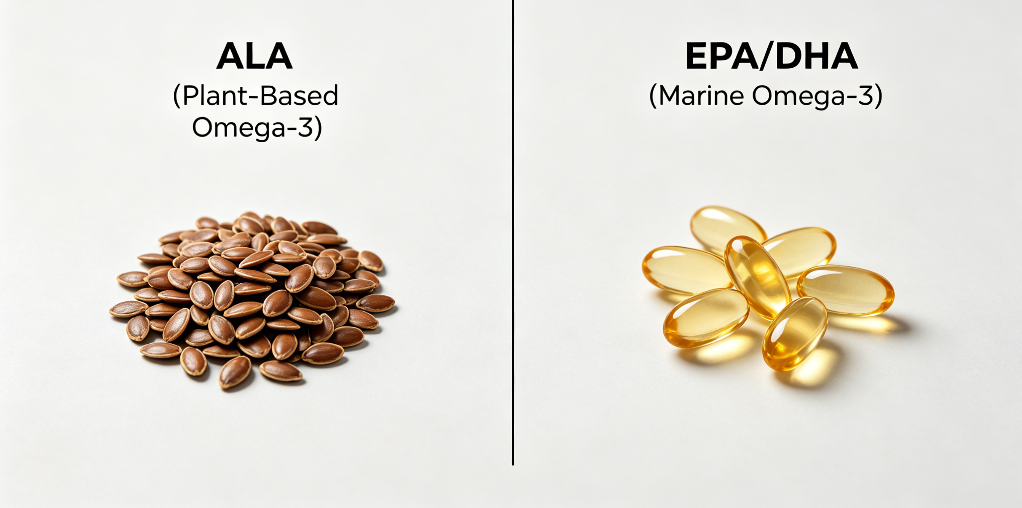
- ALA (Alpha-Linolenic Acid): The short-chain, plant-based omega-3 found in seeds, nuts, and plant oils.
- EPA (Eicosapentaenoic Acid): A long-chain marine omega-3 focused on inflammatory balance and cardiovascular support.
- DHA (Docosahexaenoic Acid): A long-chain marine omega-3 critical for cellular structure, eye health, and brain function.
Modern Western diets are frequently imbalanced in omega fatty acid ratios, containing excess omega-6 fats and insufficient omega-3s. Regular omega-3 supplementation may help restore dietary balance and support long-term wellness.
What Is Flaxseed Oil?
Flaxseed oil, also referred to as oil from flax, is a cold-pressed plant oil extracted from mature flax seeds. It is one of the richest natural sources of omega 3 from flaxseed oil in the form of ALA.
As a pure plant-based supplement, flaxseed oil contains no animal ingredients, making it suitable for vegan, vegetarian, and plant-forward diets. Premium cold-pressed flaxseed oil is minimally processed, preserving natural vitamin compounds and unsaturated fatty acids without chemical refinement or high-heat treatment.
Flaxseed oil nutrition profiles show that high-quality flaxseed oil typically contains 50% to 60% ALA omega-3, offering concentrated plant fatty acid support for daily dietary balance.
What Is Fish Oil?
Fish oil is a marine-derived supplement extracted from the fatty tissue of cold-water fish such as salmon, mackerel, and sardines. Unlike flaxseed oil, fish oil provides direct long-chain fish oil omega 3 in the forms of EPA and DHA.
Commercial fish oil products are refined, purified, and standardized to deliver consistent EPA and DHA doses. For decades, fish oil has been one of the most widely used dietary supplements for people seeking direct long-chain omega-3 support without relying on internal bodily conversion.
Flaxseed Oil vs Fish Oil: Key Nutritional Differences
The core distinction between these two supplements lies in their omega-3 structure, source type, and dietary suitability. The table below summarizes the most critical nutritional differences:
| Comparison Item | Flaxseed Oil | Fish Oil |
|---|---|---|
| Source | Plant-based (flax seeds) | Marine-based (cold-water fatty fish) |
| Primary Omega-3 Type | Short-chain ALA | Long-chain EPA & DHA |
| ALA Content | Very high (50–60%) | Minimal to none |
| EPA/DHA Content | Zero (produced via body conversion) | High, direct bioavailable levels |
| Plant-Based Friendly | 100% vegan & vegetarian safe | Not vegan or vegetarian |
| Dietary Considerations | No fish allergens, no seafood aftertaste | Contains fish allergens, may cause fishy burps |
ALA vs EPA and DHA: What Is The Difference?
Understanding ALA vs EPA DHA is essential for choosing the right omega-3 supplement. Flaxseed oil and fish oil deliver functionally different fatty acids that impact the body in distinct ways.
ALA is a foundational short-chain omega-3. The human liver can convert ALA into usable EPA and DHA, but peer-reviewed research confirms the conversion rate is naturally low and varies significantly by gender and age. According to published nutritional studies, adult males typically convert only 4–8% of ALA into EPA and less than 4% into DHA, while females show slightly higher conversion rates of roughly 9–21% for EPA and 9% for DHA due to hormonal differences.
In contrast, fish oil provides preformed EPA and DHA that require no conversion. These long-chain fatty acids are immediately bioavailable and directly support systemic cellular health. While ALA serves as a critical dietary building block, EPA and DHA deliver more targeted physiological support.
This scientific difference explains why many consumers choose to combine or alternate between plant-based flaxseed oil and marine fish oil for full-spectrum omega-3 coverage.
Flaxseed Oil Benefits Compared With Fish Oil
Unique Benefits of Flaxseed Oil
Flaxseed oil excels as a sustainable, clean plant based omega 3 option. It supports consistent dietary fatty acid balance without seafood-related drawbacks. It contains no cholesterol, no animal contaminants, and no fishy aftertaste.
Research suggests ALA-rich plant oils may support sustained metabolic wellness and balanced daily inflammation over long-term use. Its gentle formulation makes it ideal for sensitive stomachs and long-term daily stacking with other supplements.
Unique Benefits of Fish Oil
Fish oil provides concentrated, preactivated EPA and DHA that deliver immediate long-chain omega-3 support. Studies consistently show EPA and DHA play vital roles in supporting cardiovascular wellness, ocular health, and neural function.
For users with low seafood intake, fish oil offers a convenient way to boost active omega-3 levels without relying on bodily conversion processes.
Flaxseed Oil vs Fish Oil for Heart Health
Both flaxseed oil and fish oil may support cardiovascular wellness through balanced omega-3 intake.
Peer-reviewed dietary research indicates that ALA from plant sources may help maintain healthy blood lipid levels and support overall heart health as part of a balanced diet. Meanwhile, EPA and DHA from fish oil are widely studied for their roles in supporting healthy circulation and cardiac function.Flaxseed Oil for Hair Growth
No single omega-3 source is universally superior. Individuals who avoid seafood may rely on flaxseed oil for daily omega-3 support, while those seeking direct long-chain fatty acid intake often prefer fish oil. Both fit within heart-healthy dietary patterns recommended by global nutrition guidelines.
Flaxseed Oil vs Fish Oil for Inflammation
Omega-3 fatty acids are well known for supporting balanced inflammatory responses in the human body.
Fish oil’s EPA content is widely recognized for modulating daily inflammation balance due to its direct bioavailability. Flaxseed oil’s ALA supports similar benefits indirectly by serving as a precursor to anti-inflammatory lipid compounds.
Research suggests that consistent plant-based ALA intake may contribute to long-term inflammatory balance, while EPA/DHA delivers more immediate targeted support. Combining both sources can create a well-rounded fatty acid profile for systemic wellness.
Flaxseed Oil vs Fish Oil: Which Is Better for Vegetarians?
For vegetarian and vegan consumers,flaxseed oil is the clear and viable plant based omega 3 solution. Fish oil is a marine animal product and incompatible with plant-exclusive diets.
Since few whole plant foods provide high-concentration omega-3, cold-pressed flaxseed oil remains the most accessible vegan alternative for filling dietary omega-3 gaps. Vegetarians who avoid all seafood can maintain steady essential fatty acid intake through daily flaxseed oil supplementation.
Flaxseed Oil vs Fish Oil Capsules
Many shoppers compare flaxseed oil capsules vs fish oil capsules for convenient daily supplementation.
Flaxseed oil capsules deliver standardized ALA doses in simple, tasteless pill form. They are ideal for users who dislike oil textures or want portable plant-based omega-3 support. They contain zero EPA or DHA and rely on natural bodily conversion.
Fish oil capsules provide fixed EPA and DHA concentrations for guaranteed long-chain omega-3 intake. They offer consistent active fatty acid dosing but carry seafood allergen risks and occasional fishy aftertaste.
Capsule selection ultimately depends on dietary preference and whether the user prioritizes plant-based purity or direct EPA/DHA nutrition.
Which Omega-3 Source Should You Choose?
There is no one-size-fits-all “best omega 3 source.” The right choice depends entirely on individual lifestyle and nutritional needs:
- Choose Flaxseed Oil If: You follow a vegan or vegetarian diet, prefer plant-based supplements, avoid seafood, or want gentle long-term ALA fatty acid support.
- Choose Fish Oil If: You want direct EPA and DHA supplementation, have limited fish intake, or prioritize preformed long-chain omega-3 benefits.
- Choose Both: Many health-focused users stack both oils to enjoy full-spectrum ALA, EPA, and DHA omega-3 coverage for comprehensive dietary balance.
How To Add Flaxseed Oil Into Your Diet
Flaxseed oil’s versatile, mild flavor makes it easy to integrate into daily meals without cooking degradation.
- Mix into morning smoothies, yogurt, or oatmeal
- Drizzle over cold salads, grain bowls, and fresh vegetables
- Blend into homemade cold dressings and dips
- Take directly by the spoonful for fast daily supplementation
Avoid high-heat cooking with flaxseed oil, as elevated temperatures can oxidize sensitive ALA fatty acids and reduce nutritional value.
FAQs
Is flaxseed oil better than fish oil? Neither supplement is universally better. Flaxseed oil offers clean plant-based ALA omega-3, while fish oil delivers direct EPA and DHA. The best option depends on diet, preferences, and individual wellness goals.
Does flaxseed oil contain EPA and DHA? Pure flaxseed oil contains only ALA. It does not have preformed EPA or DHA, though the body can convert small percentages of ALA into these long-chain fatty acids.
Which has more omega-3, flaxseed oil or fish oil? Flaxseed oil has a higher total omega-3 percentage by volume (ALA-dominant), while fish oil provides more biologically active EPA/DHA omega-3s per serving.
Can vegetarians take flaxseed oil instead of fish oil? Yes, flaxseed oil is the ideal vegetarian and vegan alternative to fish oil for daily omega-3 supplementation.
Can you take flaxseed oil and fish oil together? Yes, stacking both oils is safe for most healthy adults. Combining ALA, EPA, and DHA creates a full-spectrum omega-3 routine for balanced nutritional support.
Final Thoughts
Comparing flaxseed oil vs fish oil shows that both omega-3 sources deliver valuable but distinct nutritional benefits. Flaxseed oil provides clean, sustainable plant based omega 3 via ALA, while fish oil offers potent, preformed EPA and DHA. Understanding these differences allows consumers to build personalized, science-aligned supplement routines that match their diet and wellness needs.Flaxseed Oil Nutrition Facts

Alex Wang
He researches nutritional information and creates educational content to help consumers better understand healthy fats, omega-3s, and food choices.