
Omega-3 fatty acids are foundational components of a balanced modern diet, supporting general wellness by contributing to healthy cellular function, cardiovascular comfort, and balanced inflammatory responses. Since the human body cannot synthesize these essential fats independently, people rely entirely on daily food sources or dietary supplements to maintain adequate levels.
When researching best omega 3 source options, consumers frequently compare flaxseed oil vs krill oil. These two popular supplements deliver omega-3 nutrition from completely different origins: flaxseed oil offers clean plant based omega 3, while krill oil provides concentrated marine-sourced omega-3. Many shoppers struggle to determine whether flaxseed oil vs krill oil benefits align with their personal diet, lifestyle, and wellness goals.
This science-backed guide offers a neutral, evidence-based comparison of flaxseed oil and krill oil. It breaks down core nutritional differences between EPA DHA vs ALA, evaluates dietary compatibility, and helps readers confidently choose between flaxseed oil capsules vs krill oil capsules for personalized daily supplementation.
What Are Omega-3 Fatty Acids?
Omega-3 fatty acids are a family of polyunsaturated essential fats that play foundational roles in human bodily function. They support structural cell health, help maintain balanced inflammation levels, and assist long-term cardiovascular wellness when consumed as part of consistent healthy eating patterns.
There are three primary forms of omega-3 relevant to human nutrition:
- ALA (Alpha-Linolenic Acid): Short-chain, plant-derived omega-3 commonly found in seeds, nuts, and vegetable oils.
- EPA (Eicosapentaenoic Acid): Long-chain marine omega-3 known for supporting inflammatory balance and circulatory health.
- DHA (Docosahexaenoic Acid): Long-chain marine omega-3 critical for cellular structure, eye comfort, and neural wellness.
A key nutritional distinction exists between these three types: ALA requires internal bodily conversion to become usable EPA and DHA, while marine-sourced EPA and DHA are directly bioavailable without conversion.
What Is Flaxseed Oil?
Flaxseed oil is a pure plant oil cold-pressed from mature flax seeds. It is one of the most concentrated natural sources of plant-based omega-3 ALA available in everyday nutrition.
As a 100% vegetarian and vegan-friendly supplement, flaxseed oil contains no animal ingredients, seafood derivatives, or marine contaminants. Premium cold-pressed flaxseed oil undergoes minimal processing, preserving natural fat-soluble nutrients and maintaining clean nutritional integrity.
Crucially, flaxseed oil exclusively provides ALA omega-3. It does not contain preformed EPA or DHA. For users seeking plant-exclusive supplementation, it remains the most reliablevegan omega 3 alternative on the market.
What Is Krill Oil?
Krill oil is a marine dietary supplement extracted from tiny Antarctic krill, small crustaceans that form the foundation of the Southern Ocean food chain. Unlike flaxseed oil, krill oil is formulated specifically to deliver active marine omega-3s.
Krill oil omega 3 profiles consist primarily of preformed EPA and DHA, bound to phospholipid structures that support high bioavailability in the human body. Krill oil is celebrated for its clean marine sourcing, low contaminant risk compared to traditional fish oil, and concentrated long-chain fatty acid content.
Because it originates from marine crustaceans, krill oil is not suitable for plant-based or allergen-
restricted diets.
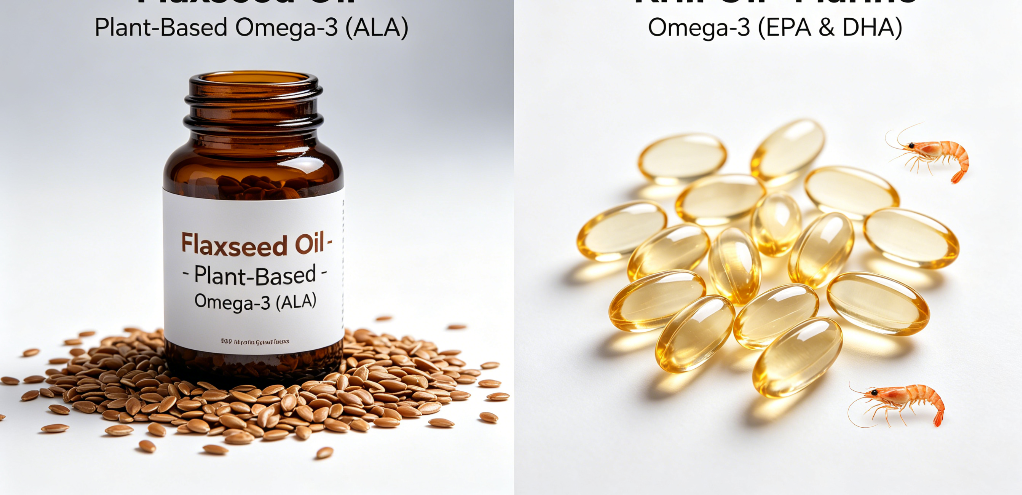
Flaxseed Oil vs Krill Oil: Nutritional Differences
The core contrast between these two supplements lies in their omega-3 structure, source type, and dietary compatibility. The table below summarizes key nutritional distinctions for quick comparison:
| Comparison Factor | Flaxseed Oil | Krill Oil |
|---|---|---|
| Source | Plant-based (flax seeds) | Marine-based (Antarctic krill) |
| Primary Omega-3 Type | ALA (short-chain plant omega-3) | EPA & DHA (long-chain marine omega-3) |
| ALA Content | Very high (50–60% of total fats) | Negligible to none |
| EPA Content | Zero (produced via bodily conversion) | High, bioavailable levels |
| DHA Content | Zero (produced via bodily conversion) | Moderate to high levels |
| Plant-Based Friendly | Yes (vegan & vegetarian safe) | No |
| Marine Source | No | Yes |
| Suitable For Vegans | Yes | No |
ALA vs EPA and DHA: Why Does It Matter?
Understanding the functional difference between ALA, EPA, and DHA is essential for choosing the right omega-3 supplement.
ALA is the essential foundational omega-3 exclusively found in plant sources. The human liver can convert ALA into active EPA and DHA, but peer-reviewed nutritional research confirms conversion rates are naturally low and vary significantly by gender and age. Studies show adult males typically convert only 4–8% of ALA into EPA and less than 4% into DHA, while females show slightly higher conversion rates of roughly 9–21% for EPA and 9% for DHA due to hormonal differences.
EPA and DHA are long-chain, biologically active omega-3s that require no conversion. They directly support systemic wellness and are the primary omega-3 forms studied in cardiovascular and inflammatory research.
In short: ALA serves as a sustainable dietary building block, while EPA and DHA deliver immediate targeted nutritional support. Neither is inherently superior; their value depends entirely on individual dietary gaps.
Flaxseed Oil Benefits Compared With Krill Oil
Unique Benefits of Flaxseed Oil
Flaxseed oil’s greatest strength lies in its clean, sustainable plant based omega 3 profile. It provides high-concentration ALA fatty acids that support balanced daily dietary fat intake without seafood allergens, marine contaminants, or fishy aftertastes.
It is naturally vegetarian and vegan-friendly, making it the primary vegan omega 3 alternative for plant-forward eaters. Consistent ALA intake may contribute to long-term dietary balance and supports overall wellness as part of healthy lifestyle habits.
Unique Benefits of Krill Oil
Krill oil specializes in delivering preformed, highly bioavailable krill oil omega 3 in the forms of EPA and DHA. Its phospholipid-bound structure supports efficient absorption, even compared to traditional fish oil.
For users with limited seafood intake or those seeking direct long-chain omega-3 support, krill oil offers a convenient, low-contaminant marine supplement option that bypasses the body’s limited ALA conversion process.
Flaxseed Oil vs Krill Oil for Heart Health
Both omega-3 sources fit within heart-healthy dietary patterns recognized by global nutritional guidelines.
Research suggests ALA from plant sources like flaxseed oilmay support healthy blood lipid levels and long-term cardiovascular balance by improving overall fatty acid ratios in the diet.
Marine EPA and DHA from krill oil are widely studied for their roles in supporting healthy circulation and maintaining consistent cardiac wellness. Because they offer different omega-3 structures, they support heart health through complementary nutritional pathways rather than competing ones.
No single source is universally better; effectiveness depends on individual dietary habits and existing nutrient intake.
Flaxseed Oil vs Krill Oil for Inflammation
Balanced omega-3 intake is closely linked to healthy inflammatory regulation in the human body.
Krill oil’s direct EPA content may help maintain balanced inflammatory responses due to its immediate bioavailability. Long-chain marine omega-3s are frequently referenced in inflammation-focused nutritional research for their targeted support.
Flaxseed oil’s ALA supports inflammatory balance indirectly by serving as a precursor to anti-inflammatory lipid compounds. While effects are slower due to conversion limitations, consistent plant-based ALA intake may contribute to long-term systemic balance over time.
Which Is Better for Vegetarians and Vegans?
For strictly plant-based eaters, flaxseed oil is the clear and viable omega-3 solution. It is 100% plant-derived, cruelty-free, and fully compatible with vegan and vegetarian dietary rules.
Krill oil is a marine animal product and is not suitable for plant-exclusive diets. Since few whole plant foods offer concentrated omega-3 ALA, flaxseed oil remains the most accessible daily supplement for vegans and vegetarians looking to fill dietary omega-3 gaps.
Flaxseed Oil Capsules vs Krill Oil Capsules
Many consumers compare flaxseed oil capsules vs krill oil capsules for convenient daily supplementation.
Flaxseed oil capsules deliver standardized ALA doses in tasteless, portable pill form. They are ideal for users who prefer plant-based supplements, dislike oil textures, or want simple daily fatty acid support. They contain no preformed EPA or DHA.
Krill oil capsules provide consistent, highly absorbable EPA and DHA per serving. They eliminate reliance on bodily conversion and deliver guaranteed active omega-3 nutrition. However, they are marine-derived and carry seafood allergen risks.
Which Omega-3 Source Should You Choose?
The best choice between flaxseed oil and krill oildepends on individual needs and dietary preferences:
- Choose Flaxseed Oil If: You follow a vegan or vegetarian diet, prioritize plant-based clean supplementation, avoid seafood, or want gentle long-term ALA fatty acid balance.
- Choose Krill Oil If: You want direct, preformed EPA and DHA omega-3 support, have low seafood consumption, or prefer high-bioavailability marine fatty acids.
- Choose Based on Nutritional Needs: Those who already consume regular seafood may benefit more from plant ALA supplementation, while plant-based eaters may rely solely on flaxseed oil for omega-3 coverage.
Can You Take Flaxseed Oil and Krill Oil Together?
Yes, many healthy adults safely combine flaxseed oil and krill oil for full-spectrum omega-3 coverage. Stacking both sources allows users to obtain ALA, EPA, and DHA simultaneously, creating a complete fatty acid profile that supports comprehensive dietary balance.
When combining supplements, it is wise to monitor total daily fat intake to avoid excessive caloric consumption. Anyone with specific medical conditions, lipid management plans, or medication routines should consult a qualified healthcare provider before starting combined supplementation.
FAQs
Is flaxseed oil better than krill oil? Neither supplement is universally better. Flaxseed oil offers plant-based ALA omega-3, while krill oil delivers active marine EPA/DHA. The right option varies by diet and personal wellness goals.
Does flaxseed oil contain EPA and DHA? Pure flaxseed oil contains only ALA. It does not have preformed EPA or DHA, though the body can convert small percentages of ALA into these long-chain fatty acids.
Which has more omega-3, flaxseed oil or krill oil? Flaxseed oil has higher total omega-3 volume by ALA concentration, while krill oil provides more biologically active EPA and DHA per serving.
Is krill oil a good source of omega-3? Yes, krill oil is a high-quality marine source of EPA and DHA with strong bioavailability and low contaminant risk compared to traditional fish oil.
Can vegetarians use flaxseed oil instead of krill oil? Yes, flaxseed oil serves as the ideal vegetarian and vegan replacement for marine-based krill oil for daily omega-3 support.
Can you take flaxseed oil and krill oil together? Yes, stacking both supplements is safe for most adults and supports full-spectrum ALA, EPA, and DHA omega-3 intake.
Final Thoughts
Comparing flaxseed oil vs krill oil demonstrates that both supplements deliver valuable but distinct omega-3 nutrition. Flaxseed oil provides sustainable, clean plant based omega 3 via ALA, perfect for plant-forward diets. Krill oil offers potent, readily usable marine EPA and DHA for users seeking direct long-chain fatty acid support.
Understanding these differences allows consumers to build personalized supplement routines aligned with their eating habits and wellness priorities. To deepen your understanding of plant-based fatty acid nutrition, explore our guides onFlaxseed Oil Benefits, complete Flaxseed Oil Nutrition Facts, the full Flaxseed Oil vs Fish Oil comparison, our Best Flaxseed Oil Buying Guide, and whether you Can You Take Flaxseed Oil Everyday for consistent long-term supplementation.

Alex Wang
He researches nutritional information and creates educational content to help consumers better understand healthy fats, omega-3s, and food choices.