
Shoppers frequently ask: is flaxseed oil the same as linseed oil? The confusion is completely understandable. Both oils come from the exact same flax plant seed, and the two names are often used interchangeably in different regions and industries. However, assuming they are identical and interchangeable is a common and potentially dangerous mistake for consumers.
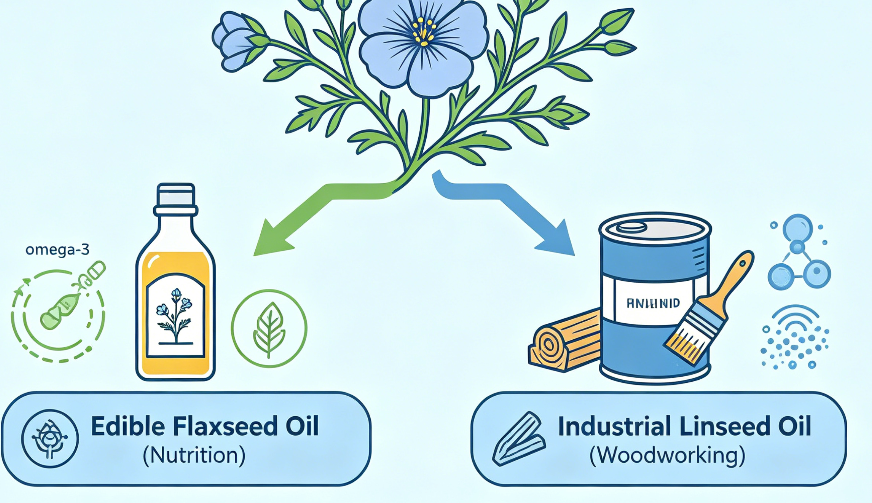
In consumer health spaces, flaxseed oil vs linseed oil is one of the most misunderstood oil comparisons. The core difference lies not in the plant source, but in processing standards, intended use cases, and food safety grading. Edible flaxseed oil is formulated for human nutrition, while most commercial linseed oil is manufactured for industrial and craft applications, not consumption.
This science-backed guide clarifies the difference between flaxseed oil and linseed oil, breaks down safety rules for eating oil, compares nutritional profiles, and teaches you how to identify safe, food-grade products. Whether you are researching flax oil vs linseed oil for cooking, supplementation, or household use, this article will help you make safe, informed decisions aligned with healthy dietary practices.
What Is Flaxseed Oil?
Flaxseed oil is a premium, food-grade vegetable oil cold-pressed from mature flax seeds, specifically refined and tested for human consumption. It is the standard term used in North American health and nutrition markets to describe edible flax-based oil.
Flaxseed oil is commonly used as a nutritional oil for daily dietary supplementation. Its primary nutritional strength is its high concentration of alpha-linolenic acid (ALA), an essential omega-3 fatty acid that the human body cannot produce on its own. Quality edible flaxseed oil undergoes strict food safety processing, avoiding harsh chemical treatments or heat oxidation that could compromise purity.
Regular, controlled intake of edible flaxseed oilmay support balanced dietary fat ratios and overall wellness as part of a healthy lifestyle. Many consumers integrate it into cold meals, smoothies, and daily supplement routines after learning how much flaxseed oil per day fits balanced dietary guidelines. It is also widely used for external beauty support, with consistent research backing flax seed oil for hair growth and skin hydration benefits.
What Is Linseed Oil?
Linseed oil is simply the regional and industrial term for oil pressed from flax seeds. In European, Australian, and industrial manufacturing markets, “linseed” is the preferred word for the flax plant and its seed oil.
While the source plant is identical, most commercially sold linseed oil is intended for non-food use. It is famous for traditional and modern industrial applications, including wood finishing, furniture conditioning, natural paint production, artist coatings, and industrial sealants. Industrial-grade linseed oil often undergoes heat polymerization, chemical processing, or additive treatment to boost its drying and adhesive properties — processes that make it unsafe for human consumption.
It is critical to understand that linseed oil is not inherently a health or nutrition product. Its formulation prioritizes durability, texture, and drying performance for crafts and manufacturing, not nutritional purity or safety.
Are Flaxseed Oil and Linseed Oil the Same?
Technically, flaxseed oil and linseed oil derive from the exact same plant source: flax seeds. The botanical origin is identical, which explains the widespread naming overlap.
However, they are not functionally or safely the same for consumers. The similarity ends at the plant source. The vast difference comes down to industry standards:
- Flaxseed Oil: Almost always food-grade, processed for nutrition purity, and intended for human consumption in North American consumer markets.
- Linseed Oil: Primarily industrial-grade, processed for coating and drying functions, and intended for non-food household and manufacturing use.
Rare food-grade linseed oil exists in international markets, but it is far less common and always requires explicit labeling. In short: the name overlaps, but safety, processing, and purpose rarely do.
Flaxseed Oil vs Linseed Oil: Main Differences
To eliminate consumer confusion, the table below outlines the definitive differences between standard edible flaxseed oil and conventional industrial linseed oil:
| Comparison Factor | Flaxseed Oil | Linseed Oil (Industrial Standard) |
|---|---|---|
| Source | Cold-pressed flax seeds | Pressed flax seeds (same botanical source) |
| Plant Origin | Flax plant (Linum usitatissimum) | Flax plant (Linum usitatissimum) |
| Food Grade | Yes, certified edible | No, not safe for eating |
| Common Uses | Dietary supplement, cold culinary use, wellness support | Wood finishing, paints, coatings, industrial sealants |
| Processing | Cold-pressed, minimal heat, no industrial additives | Heat-processed, polymerized, often contains industrial additives |
| Omega-3 Content | High, preserved ALA omega-3 | Degraded fatty acids due to high-heat processing |
| Safety Considerations | Safe for daily dietary use when stored properly | Not for internal consumption; may contain toxic processing byproducts |
Can You Eat Linseed Oil?
This is one of the most critical consumer safety questions surrounding flaxseed oil vs linseed oil for eating. The short answer: you cannot eat standard industrial linseed oil.
Industrial linseed oil undergoes high-heat polymerization and may include chemical additives designed to help the oil dry hard and form durable coatings. These processing methods destroy nutritional value and create compounds unsuitable for human digestion. Consuming craft or industrial linseed oil poses unnecessary health risks.
The only exception is explicitly labeled food-grade linseed oil, which follows edible processing standards identical to North American flaxseed oil. However, food-grade linseed oil is rare in U.S. retail markets. Consumers should never assume a product labeled “linseed oil” is safe to ingest without clear edible certification.
Flaxseed Oil Nutrition Benefits
Properly processed edible flaxseed oil offers consistent plant-based nutritional value centered on ALA omega-3 fatty acids. Unlike industrial linseed oil, it is designed to retain natural nutrient integrity.
As highlighted in our detailed Flaxseed Oil Benefits guide, its high ALA content may contribute to balanced dietary fat intake, helping offset excess omega-6 fats common in modern processed diets. Its clean, unsaturated fat profile can be part of a balanced diet that supports long-term general wellness.
For consumers comparing lipid sources, our Flaxseed Oil vs Fish Oil breakdown explains how plant-based ALA differs from marine EPA/DHA, helping users build diverse fatty acid routines. Full flaxseed oil nutrition analysis shows it also contains supportive vitamin E compounds that protect healthy fats from oxidation when stored correctly.
Linseed Oil Uses Outside Nutrition
Linseed oil’s value lies exclusively in industrial and craft functionality, not human nutrition. Its unique drying-oil properties make it a staple in creative and manufacturing industries worldwide.
Common non-food uses include natural wood conditioning and furniture finishing, traditional oil painting mediums, canvas priming, metal rust prevention, and natural sealant production. When heat-processed, linseed oil develops a tough, waterproof film that makes it ideal for protective coatings.
These functional traits are exactly why industrial processing alters the oil’s natural state — making it excellent for crafts but completely unsuitable for dietary use.
Flaxseed Oil vs Linseed Oil for Omega-3
If your goal is omega-3 supplementation, only certified edible flaxseed oil (or food-grade linseed oil) delivers nutritional value.
Edible flaxseed oil preserves raw ALA omega-3 fatty acids, offering reliable plant-based essential fat support. Industrial linseed oil loses most viable nutritional content during high-heat processing. Its fatty acid structure becomes oxidized and altered, so it provides zero dietary omega-3 benefits.
In summary: both oils start with omega-3-rich flax seeds, but only food-grade flaxseed oil retains usable flaxseed oil omega-3 nutrition for human wellness.
How To Choose Safe Flaxseed Oil
Avoiding unsafe industrial oil and selecting premium edible flaxseed oil relies on careful product evaluation and proper storage. Follow these evidence-based guidelines:
Check for food-grade labeling: Always confirm explicit “food grade” or “edible” certification on the bottle. Avoid generic “linseed oil” products with no dietary safety markings.
Choose cold-pressed varieties: Cold-pressed flaxseed oil avoids high-heat damage, preserving maximum ALA nutrition and purity. Our Best Flaxseed Oil Buying Guide details how to filter premium, low-processed options.
Select dark glass bottles: Light and heat oxidize flaxseed oil quickly. Dark amber or green bottles protect fragile fatty acids from degradation.
Follow proper storage rules: To extend shelf life and preserve nutrition, store flaxseed oil sealed and refrigerated after opening. Our guide on How To Store Flaxseed Oil outlines step-by-step best practices to prevent oxidation and spoilage.
Common Questions About Flaxseed Oil and Linseed Oil
Is flaxseed oil the same as linseed oil? Botanically they come from the same seed, but they differ drastically in processing, safety, and use. Standard linseed oil is industrial, while flaxseed oil is food-grade for nutrition.
Can you eat linseed oil? Only explicitly labeled food-grade linseed oil is safe for consumption. Standard industrial linseed oil is not edible and should never be ingested.
What is the difference between flaxseed oil and linseed oil? The key difference is grading and purpose. Flaxseed oil is processed for dietary safety and nutrition; most linseed oil is processed for industrial coating and craft use.
Is flaxseed oil better than linseed oil? For nutrition and eating purposes, food-grade flaxseed oil is far superior. For woodworking and industrial projects, processed linseed oil is the appropriate choice.
Does flaxseed oil contain omega-3? Yes, premium cold-pressed flaxseed oil is rich in ALA omega-3, an essential plant-based fatty acid that supports balanced dietary wellness.
Is food-grade linseed oil safe? Yes, certified food-grade linseed oil follows edible safety standards and is nutritionally comparable to standard flaxseed oil.
Final Thoughts
Understanding the real distinction in flaxseed oil vs linseed oil protects consumers from common safety and purchasing mistakes. The naming overlap creates confusion, but the functional divide is clear: flaxseed oil is a nutritional, edible superfood oil, while conventional linseed oil is an industrial craft product.
Always prioritize food-grade certified products for dietary supplementation, and reserve linseed oil exclusively for household and creative projects. For more trusted flaxseed nutrition resources, explore our full collection of guides covering benefits, nutrition facts, usage dosages, storage methods, and cosmetic applications.

Alex Wang
He researches nutritional information and creates educational content to help consumers better understand healthy fats, omega-3s, and food choices.